Label it an ideology, a doctrine or cultural movement!
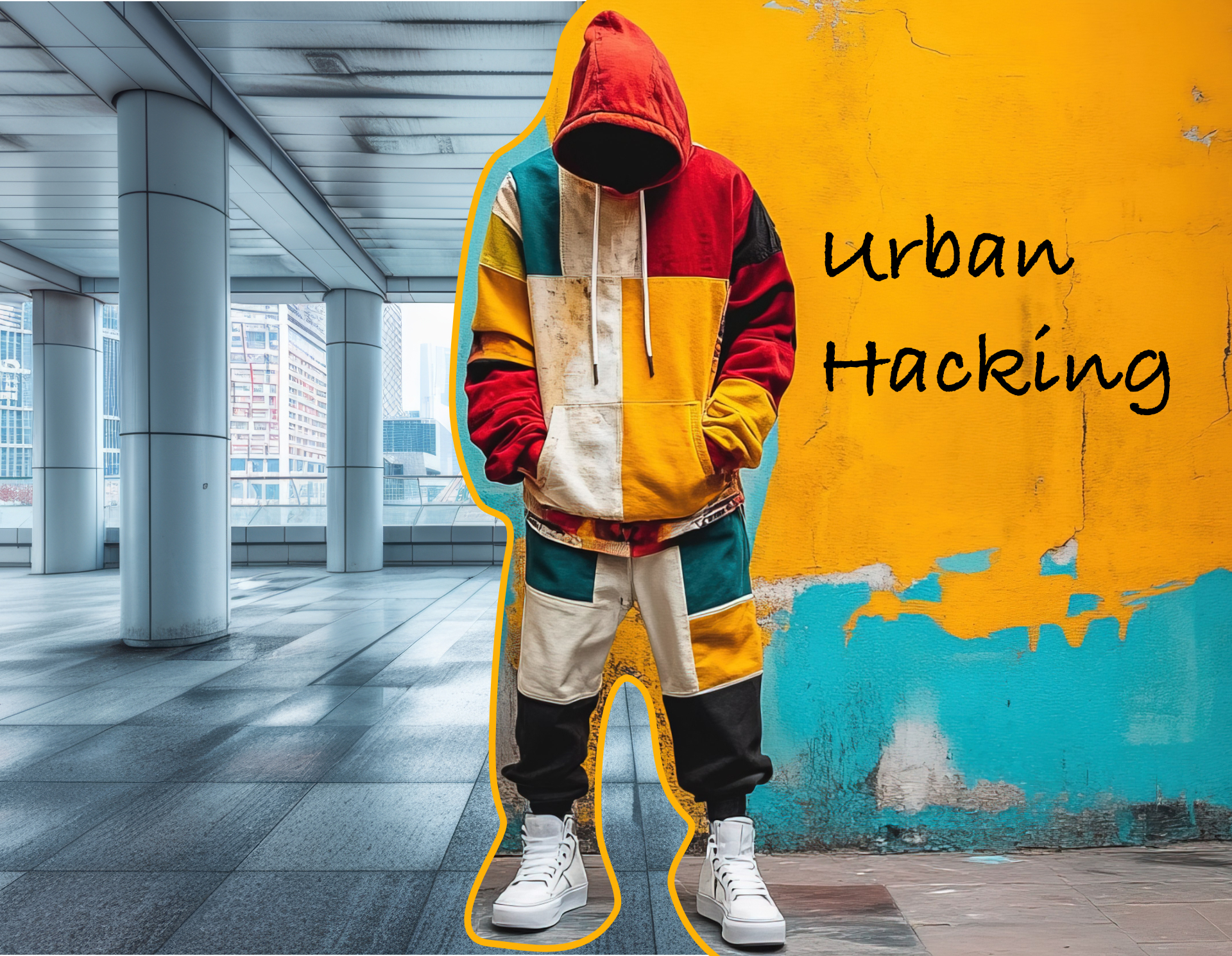
“Urban Hacking” by the innovative and critical mind of Weilin Chen, is a geospatial collection that expresses an aspect of London Architecture as an inner city phenomena. It is not traditional mainstream cultural heritage – but based on reclaimed and up-cycled urban spaces and treasures, that are a testament to the creativity of London’s active, resilient and resourceful communities. Weilin has tuned-into a smart, edgy and raw energy that exists within the layers of the city of London and through her collection she reveals an aspect of humanity and modern city-living that is celebrated and loved.
Urban Hacking and the Rebirth of London’s Architectural Icons with Hexology by Weilin Chen
London is often described as a city of layers, but it wasn’t until my internship at Hexology that I truly began to understand what that means. Tasked with the challenge of creating cultural content about London’s Architecture and using the Hexology geospatial micro-blogging platform to write this content into the location of architectural sites, I had to find a topic that I could write about and an angle I felt connected to. Looking at the city through the lens of the Global Digital Citizenship and Digital Cultural Curation of Global Heritage internship at Hexology, I found myself reading buildings not as static monuments, but as dynamic texts—sites rewritten through time, memory, and human intervention. Hexology’s geospatial platform shifted me and my perspective to reveal this hidden dimension: where digital layers and where micro-histories, forgotten moments, details and alternative narratives, quietly unfold.
The Old Truman Brewery
My collection focuses on what I call “Urban Hacking” a process I describe as the creative reprogramming of architectural space that allows old structures to acquire new social, cultural, and economic functions. Nowhere embodies this more vividly than the Old Truman Brewery. Once a centre of industrial brewing, it has transformed into a powerhouse of creative production—its brick halls now host fashion labs, photography studios, and immersive exhibitions. Rather than erasing its industrial past, the site uses it as raw material for contemporary cultural identity, demonstrating how architectural reuse can drive flexible and inclusive creative economies.
Boxpark Shoreditch
Boxpark Shoreditch offers a different type of hack. Built from recycled shipping containers, it compresses retail, community, and digital culture into a modular system that can be assembled, disassembled, and reshaped with remarkable agility. By reimagining what a “mall” can be, it challenges traditional ideas of permanence and urban form and the retail experience. The physical architecture becomes secondary to the culture of rapid adaptation it enables.
Brick Lane
In contrast, some locations reveal how the city is rewritten from the ground up. Brick Lane, long shaped by migration and working-class life, has become an open-source canvas for visual dissent. Here, graffiti operates like a counter-mapping tool, expressing identities and histories not always present in official heritage narratives – but they are urban treasures that belong to inner city communities.
Battersea Power Station & The 02
Other sites carry the weight of monumental transformation. Battersea Power Station – once an icon of industrial power – has evolved into a refurbished curated environment for retail, housing, and global corporate presence to define a peak visitor experience. Its revival is undeniably impressive, yet it also raises questions about access, exclusivity, and the politics of urban regeneration. The O2, similarly, demonstrates how architectural “failure” can be reprogrammed into spectacle. What began as the controversial Millennium Dome is now an entertainment organism fuelled by immersive technologies and hyper-commercial experience design.
Through my Urban Hacking collection and the posts I have published on Hexology, I aimed to highlight how community-authored markings reclaim space, challenge gentrified aesthetics, and resist the sanitising pressures of urban redevelopment. To view the collection inside the Hexology app click on the banner image below with your smartphone:
#UrbanHacks Ruins Anew
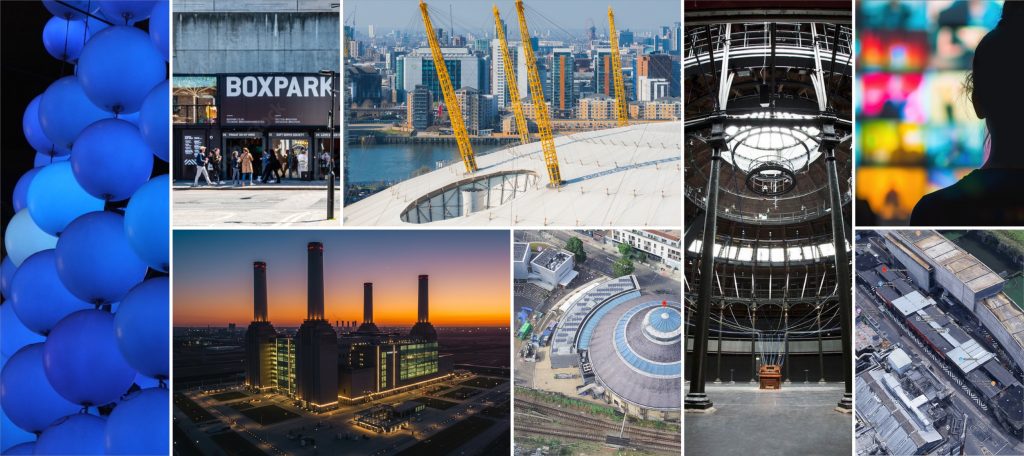
Modern LDN shifts industrial irons into hip cultural spaces, where heritage meets community & sparks creativity
Working with Hexology not only reshaped and augmented how I see London but also how I communicate its complexity. The challenge was to condense extensive research into concise, accessible micro-posts capable of sparking curiosity at the exact moment someone stands in front of a building. Writing for physical–digital interaction requires precision: one historical insight, one overlooked detail, or one provocative question must be enough to shift how a passer-by interprets the space around them.
What excites me most about Hexology is its democratising effect. It opens cultural heritage beyond institutions, enabling anyone with curiosity to share and access stories embedded in the city’s material culture. In doing so, it transforms public space into a participatory archive—one shaped collectively, in real time, by diverse voices.
Curating this collection has made me feel connected to London’s past and its evolving future. The digital traces I leave through Hexology may be small, but they now inhabit the city as part of its living cultural fabric. For anyone exploring these locations through the app, I hope these micro-stories prompt a moment of reflection, a shift in perspective, or simply a renewed awareness that the places we move through every day are far more layered, contested, and alive than they appear.
About Weilin Chen
Weilin Chen has experience of working in journalism, nonprofit communications, digital publishing, and public storytelling – graduating from King’s College London where she studied Digital Media and Culture.